Assassin's Creed Unity launch: the 2014 bug fiasco
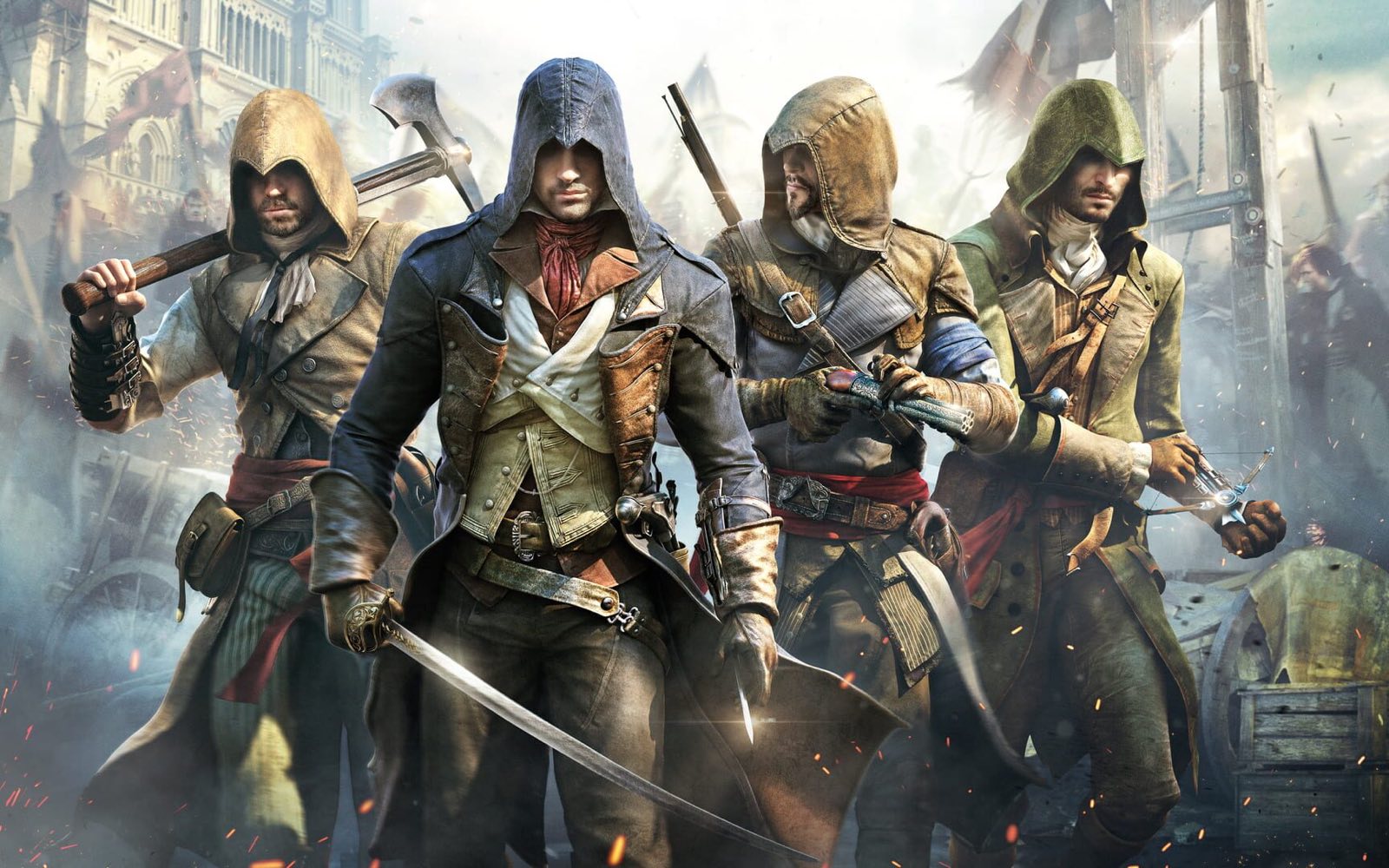
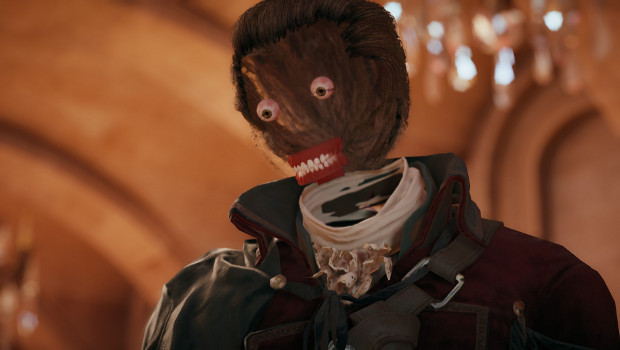
Assassin’s Creed Unity reached North America on 11 November 2014, and within days the internet was passing around clips of characters whose faces had simply vanished. Other videos showed Arno walking on thin air or sinking through the floor. Ubisoft had pushed the release back two weeks, from 28 October to 11 November, to “hone some of the details”. As the first Assassin’s Creed built only for the PlayStation 4, the Xbox One and PC, Unity was meant to be the series’ big technical leap. It is remembered as one of the shakiest launches of the generation.
Missing faces and a hero who falls through the floor
The list of problems is long: co-op crashes, a main menu that takes forever to appear, broken matchmaking, erratic animations, hair with its own idea of physics. Ubisoft eventually published a list of the most reported bugs and opened a dedicated live-updates page.
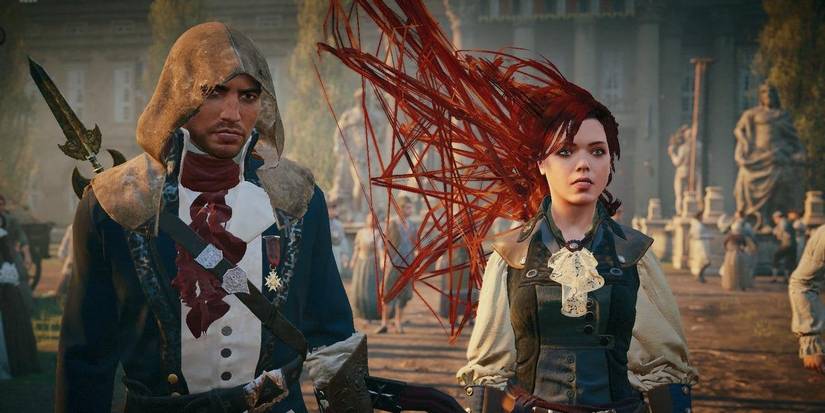
The most famous bug, the missing faces, was also among the least widespread. After extensive testing, the studio said it only hit PCs with one or two specific graphics cards, and that the day-one patch fixed it. The clips travelled far faster than the fix.
Under 30 frames per second, and 900p for everyone
In early October 2014, senior producer Vincent Pontbriand announced that the game would run at 900p and 30 frames per second on both consoles, to “avoid all the debates” between PS4 and Xbox One. He blamed a processor bottleneck, swamped by AI and the number of extras, and said that on graphics alone the game could hit 100 frames per second. Ubisoft later denied having held back the PS4 version.
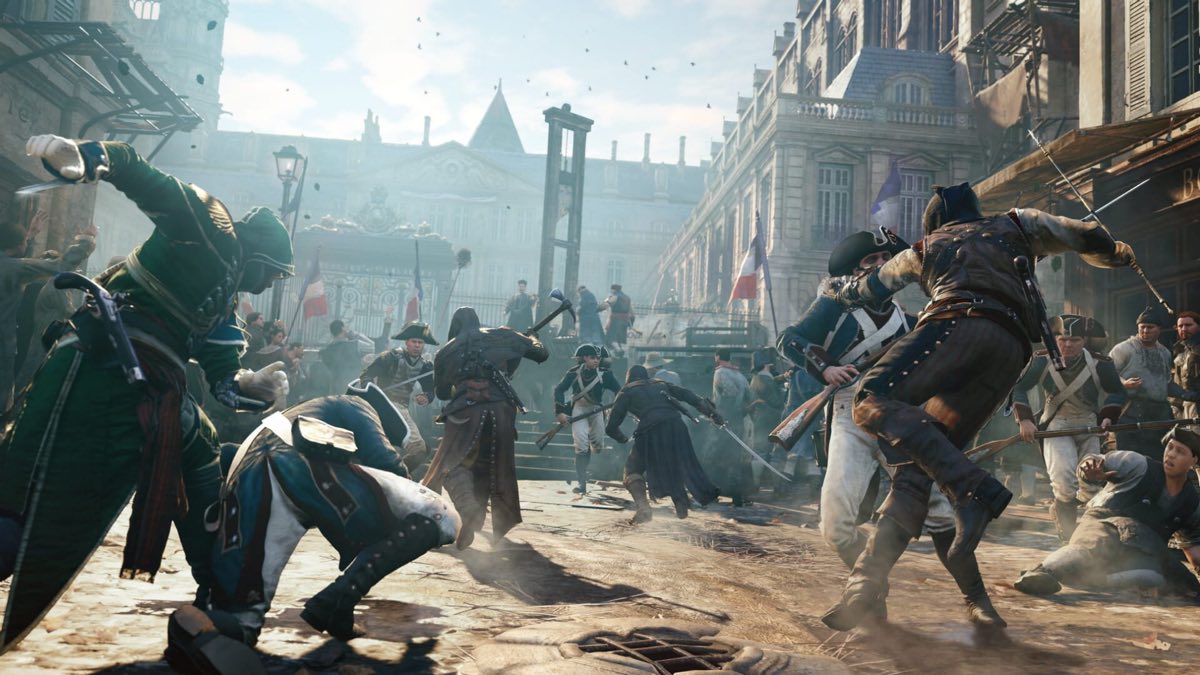
Digital Foundry measured something else a few days after release: in a packed square, the PS4 drops to around 20 frames per second for long stretches, with the Xbox One holding about five frames more, and across the rooftops both machines swing between 25 and 30. The densest crowds in the game can reach a few hundred extras. Digital Foundry floated the most mundane explanation: a team that ran out of time.
Ubisoft eventually acknowledged a gap between what it saw before launch and what it saw after: the instruction queue was overloading. Crowd size had nothing to do with it, according to its own tests. The studio even suggested that players cut their internet connection to gain a few frames per second.
Reviews lifted twelve hours after release
The first buyers also bought blind. Ubisoft had set an embargo that barred outlets from publishing reviews until Tuesday afternoon, about twelve hours after the game went on sale in the US. The official justification: an increasingly connected game needs populated worlds and online services to be reviewed properly, and assembling those conditions before launch is very complex. PC Gamer replied that the argument did not explain what the embargo was for, other than keeping reviews under wraps for the first few hours. Kotaku announced soon after that it would no longer accept post-release review embargoes.
Ubisoft promised to change how it works with reviewers and to offer open betas or early access. When the reviews landed, the verdict was mixed: between 70 and 72 on Metacritic depending on the platform. Six months earlier, the publisher had already had to answer the graphics downgrade controversy around Watch Dogs.
An apology, free DLC and a scrapped season pass
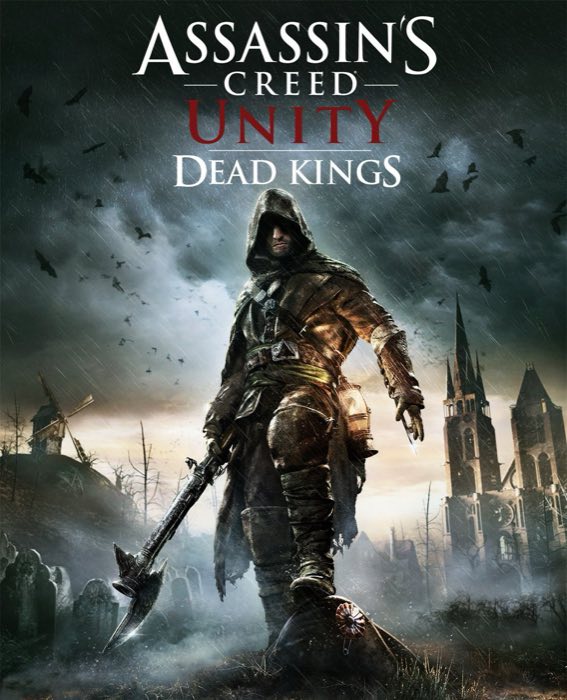
On 26 November 2014, Yannis Mallat, head of Ubisoft Montreal and Toronto, published a blunt apology: at launch, “the overall quality of the game was diminished by bugs and unexpected technical issues”, and he apologised on behalf of Ubisoft and the whole Assassin’s Creed team. The commercial gesture followed. The Dead Kings expansion became free for everyone, the season pass was pulled from sale, and its owners could pick a free game from a selection of six, including Assassin’s Creed IV: Black Flag and Rayman Legends. The third big patch, with more than 300 fixes, arrived the same day.
An engine rebuilt from scratch, a series that slows down
In February 2015, Yves Guillemot told investors that “a few things were not perfect” at launch. His explanation: with the switch to a new console generation, Ubisoft had to redo its engine 100%, a gruelling job for the whole group. Nine months later, CFO Alain Martinez acknowledged that the first week of Assassin’s Creed Syndicate had “clearly” been hit by what happened with Unity. Guillemot added that playtime in Syndicate was “massively” up on Unity.
In February 2016, Ubisoft announced there would be no Assassin’s Creed that year. The statement does not name Unity as the cause, but it says the team had “learned a lot” from player feedback since its release and had updated its development processes.
A slow rehabilitation, then a detour through Notre-Dame
As early as October 2015, Game Informer reopened the case: after five patches the game had become fun and functional, the chests locked behind the companion app opened with a simple button press, and the frame rate, though not ideal, no longer stopped play. In May 2020, Ubisoft listed Unity among the eleven PS4 and Xbox One generation games to have sold more than ten million copies.
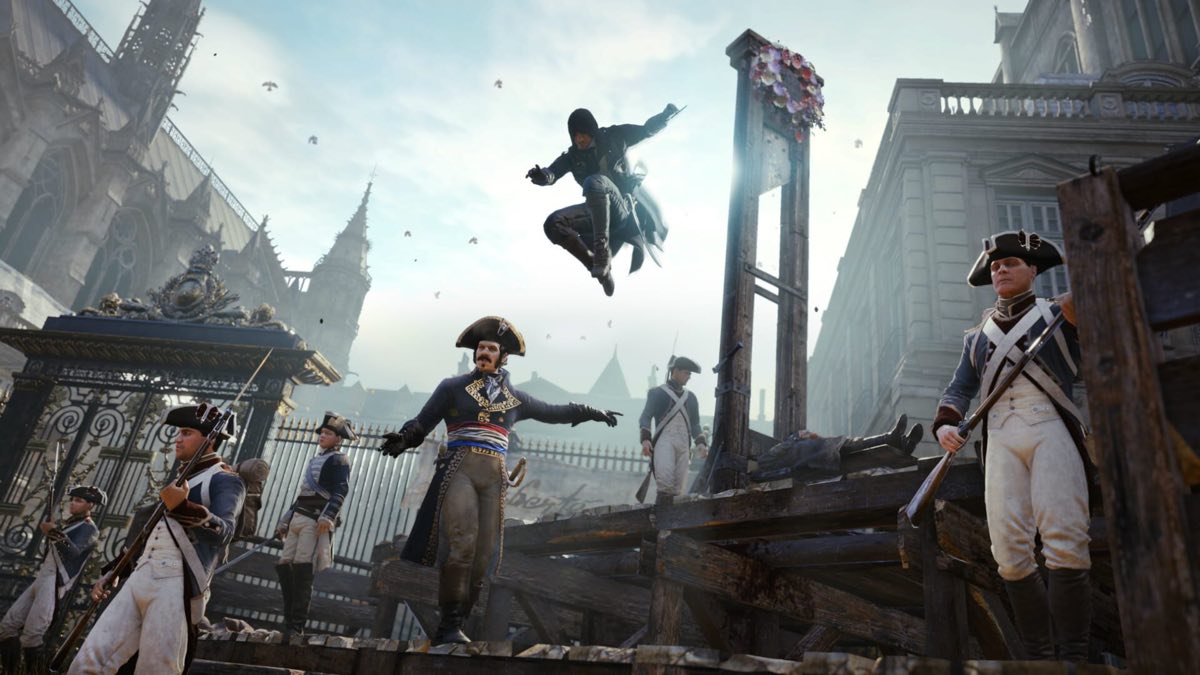
The fire at Notre-Dame in April 2019 gave the game a second life. Ubisoft announced a donation of 500,000 euros toward the restoration and gave away the PC version for a week. The game’s cathedral was recreated by a studio artist, Caroline Miousse, who explained in 2014 that she had spent two years on it and 80% of her working time on that one monument.
No Man’s Sky went through a comparable rehabilitation, covered in our article on its comeback. Unity got an update in March 2026 that runs it at 60 frames per second on PlayStation 5 and Xbox Series X|S.
A game bought on release day is not the game you play a year later, and that is even truer when a library is scattered across Steam, PlayStation, Xbox and Nintendo. Radion brings those accounts together to keep a record of what you own, what you started and what you shelved while waiting for a patch. The app will not tell you whether that patch fixed anything, you have to relaunch the game to find out. Unity did end up justifying the wait, but it is the 2014 launch that players remember.