No Man's Sky comeback: how a 2016 flop won players back
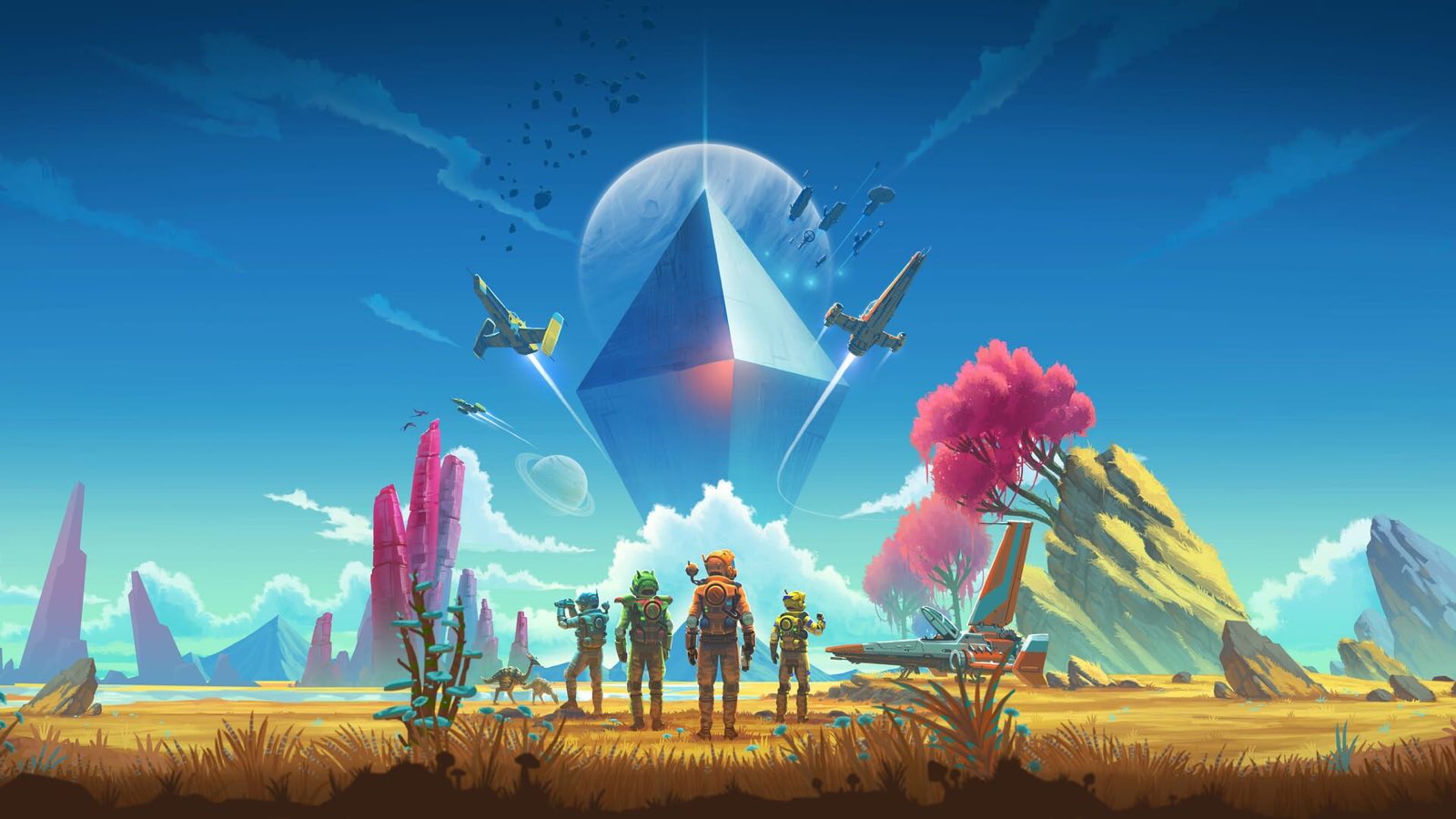
On 27 November 2024, Sean Murray announced that No Man’s Sky had reached “Very Positive” across all of its Steam reviews, eight years after a launch that became a textbook case of what not to do. “You have no idea what this means to us,” wrote the Hello Games boss. Less than two years later, his letter for the game’s tenth anniversary goes further: 2026 has brought the best player numbers since release. This comeback owes a lot to forty free updates, and just as much to a completely different way of talking to players.
A promise too big for nine people
Revealed in late 2013 and backed by Sony, the game promised 18 quintillion procedurally generated planets, built by a team that averaged nine people. The delay from June to August 2016 had already earned Murray death threats. In early August, the game arrived on PlayStation 4 and on PC.
On Steam, more than 212,000 players were online at the same time at the launch peak, the biggest of 2016. Less than two weeks later, that number had dropped by 88%. PC Gamer pointed out that big launches always fade fast, with Far Cry Primal losing 82% in a month, but this fall was steeper than usual. The reasons piled up: planets that ended up looking alike, bugs on PC, and features seen in pre-release footage that were nowhere to be found, starting with the chance to run into other players.
The studio saw the wave coming with no lifebuoy. At GDC 2017, Murray explained that the team had planned for fewer than 14,000 simultaneous players, a figure borrowed from Far Cry Primal, before roughly 500,000 players showed up on day one. One employee handled the networking, and money was running short.
Three months of silence, then the “Foundation” update
After release, Hello Games said almost nothing outside patch notes. Accusations of lying and refund requests went unanswered. The UK advertising regulator, the ASA, ended up examining the Steam page after 23 complaints and ruled in November 2016 that it was not misleading: the gaps between pre-launch screenshots and the final game were cosmetic, and the studio had shown footage close to what the images suggested. Since November 2016, Valve has nonetheless required screenshots and videos on Steam pages to come from the game itself, a rule several journalists link to this affair. The row echoes the one over the graphics downgrade in Watch Dogs.
On 25 November 2016, the studio broke its silence: “We have been quiet, but we are listening.” The “Foundation” update landed two days later, with base building, Survival and Creative modes, freighters to own, and the promise of being the first of many free ones.
One free update after another
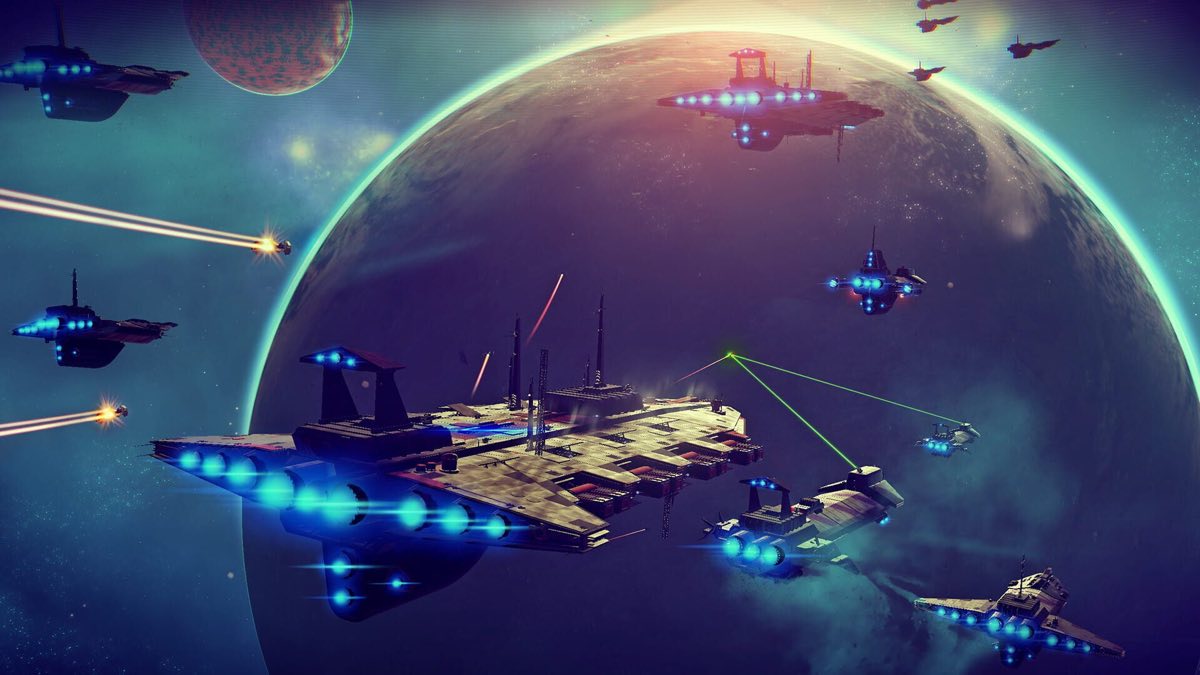
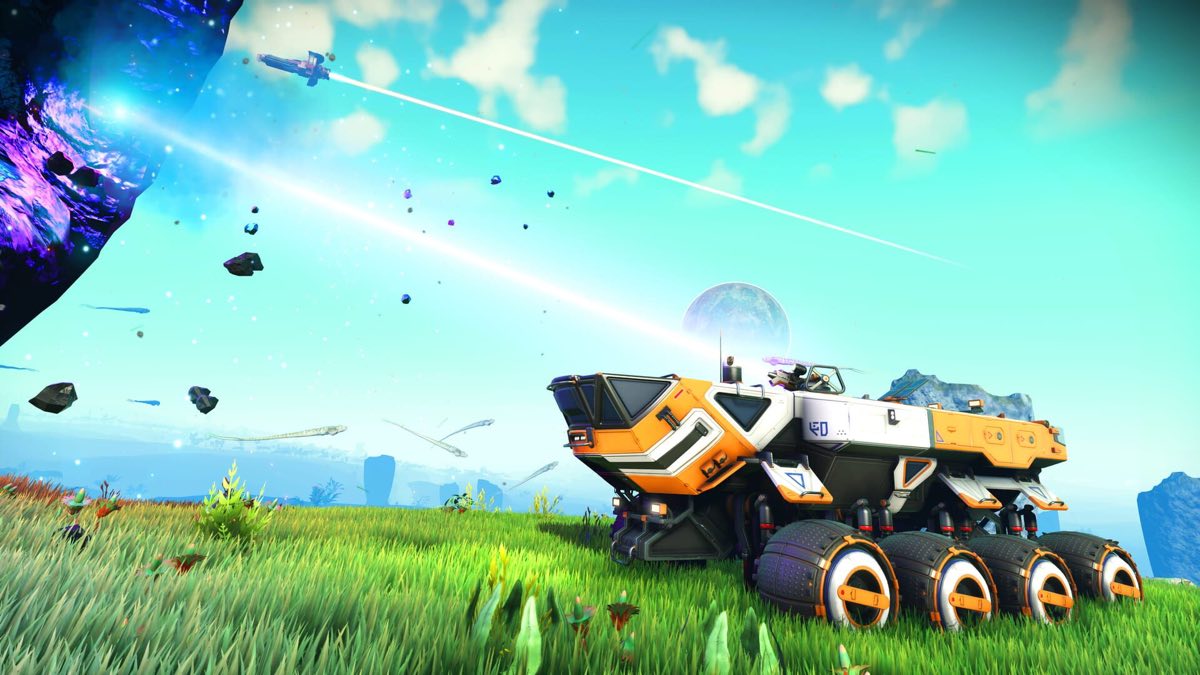
What followed looks like a methodical catch-up on the original promise. “Pathfinder”, in March 2017, added ground vehicles, the Exocraft, and a permadeath mode. “Atlas Rises”, in August 2017, grafted on a narrative thread. “Next”, in July 2018, finally delivered four-player multiplayer, a third-person view and fleets of frigates, and arrived on Xbox One. To bit-tech, the game now came much closer to the one in the original trailers. “Beyond”, in August 2019, brought virtual reality and an overhaul of multiplayer, announced with no subscription, no microtransactions and nothing to pay for existing players.
Platforms followed: PlayStation 5 and Xbox Series X|S in November 2020, Nintendo Switch in October 2022, Switch 2 in 2025. The studio also changed its method: it no longer announces a feature before it is ready.
The numbers behind the recovery
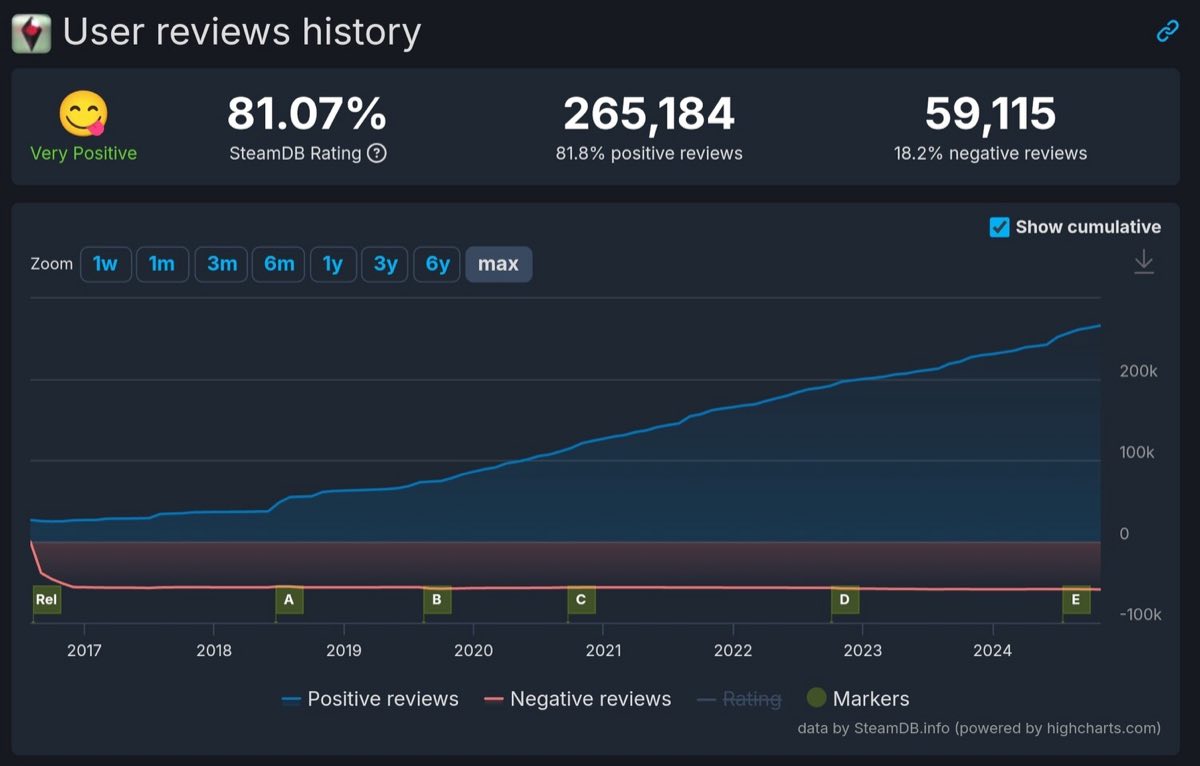
On Steam, the overall rating went from Mixed two years after release to Mostly Positive in 2021, then to Very Positive (over 80% favourable reviews) in November 2024. Murray had warned in April that year that each point gained was mathematically harder to earn than the last.
As for player numbers, the “Voyagers” update of late August 2025 lets you assemble your own corvettes piece by piece, to the point that players built Millennium Falcons and F1 cars. The game climbed to 98,285 simultaneous players on Steam on 1 September, its best score since 2016, when the peak topped 212,000.
In his letter of summer 2026, Murray cites tens of millions of players and hundreds of millions of hours spent in the game, plus a BAFTA and a Game Awards prize for evolving games. Most of the people in the famous gold master photo still work at Hello Games, he adds, and the team has not grown much. The “Cosmos” update, released on 9 September 2026, lets you claim space stations and build in open space, for a billion units and a reputation level of 40. The full game is also coming to iOS on 28 October, without multiplayer.
Not everyone has turned the page
Not everyone is ready to forgive. In 2021, Thomas Mahler, founder of Moon Studios (the Ori series), called the developers of games like No Man’s Sky and Cyberpunk 2077 “snake oil salesmen”, arguing they should not be showered with awards for delivering years later what they had promised. Cyberpunk 2077 has nonetheless reached Very Positive on Steam too, in July 2023. Hello Games never charged for its updates, and is now working on Light No Fire. Murray says he wants to keep going as long as the team is having fun and the community sticks around.
A game dropped in 2016 is not the same game today, which is easy to lose track of in a library scattered across Steam, PlayStation and Switch. Radion brings those libraries together and keeps a record of what you played, abandoned or own. The app will not tell you whether an update changed a game, you have to relaunch it to find out, but it does remind you that a title shelved in a corner still exists. Ten years and tens of millions of players later, fewer than 1% of No Man’s Sky’s planets have been visited.