MissingNo: the Pokémon glitch that became a cult monster

In Pokémon Red and Pokémon Blue, released on Game Boy, there is a creature that was never supposed to show up on screen. MissingNo has no real artwork, just a pile of scrambled pixels, and its Pokédex entry is numbered 000. Nintendo eventually warned its readers that even brushing against it could wreck a save file. Decades later, players still go looking for it.
A nickname, an old man and a coastline with no Pokémon
Triggering the encounter follows a routine that became a classic. You first head north of Viridian City and let an old man run his catching demonstration. Then you fly to Cinnabar Island and Surf along the east coast, hugging the land. A few steps later, an impossible Pokémon shows up.
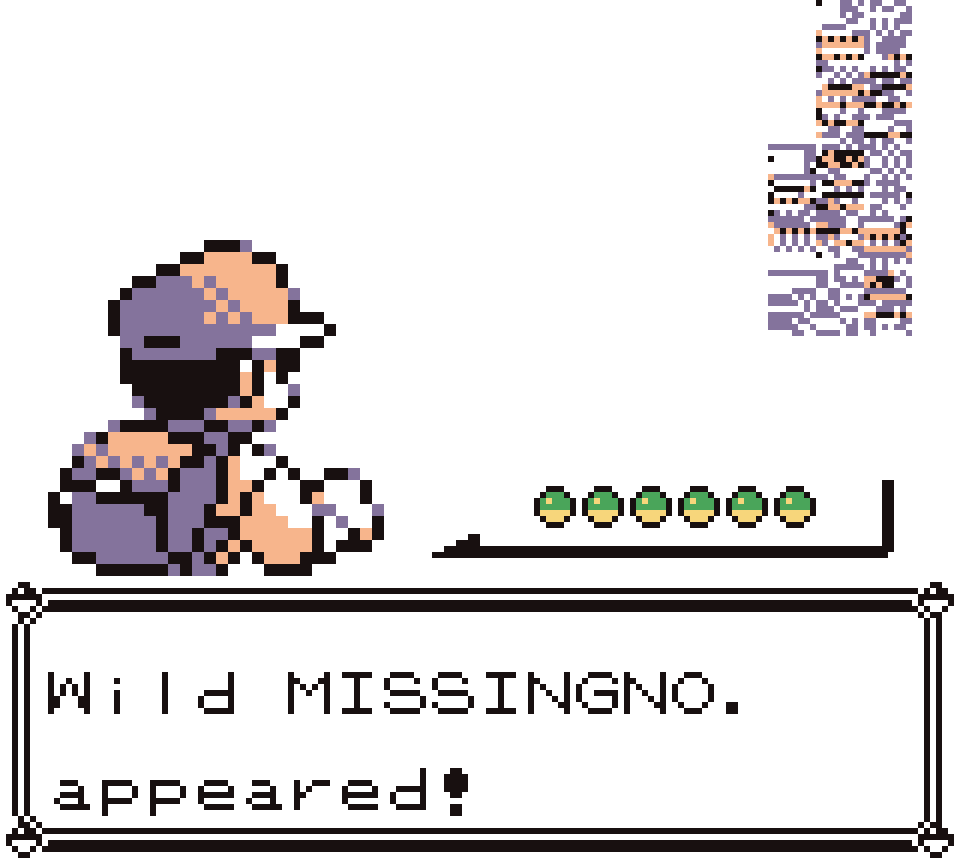
The cause is a side effect. During the demo, the game swaps your name for the old man’s and parks the real one in a memory area it also uses to pick wild Pokémon, as Kotaku and Screen Rant both explain. Nearly everywhere, that area gets rewritten at every battle. On Cinnabar’s east coast no encounter is defined, so nothing overwrites it, and the game reads the letters of your name as if they were a list of Pokémon. What you meet depends on what you called yourself, which means every save file gets its own flavor of the bug.
Nintendo did not take the bug out of its 3DS re-releases: the glitch was still there in the versions sold on the eShop for the Nintendo 3DS when they came out in February 2016.
What the encounter does to your save
The bug has two faces. The first one built its reputation: meeting MissingNo adds 128 to the quantity of the sixth item in your bag, a much-loved way to duplicate rare items. The second was less fun. The screen fills with corrupted graphics, and catching the creature can damage your Hall of Fame data.
Nintendo Power summed up the risk in May 1999, in its reader Q&A column PokéChat (issue 120). Asked “What is MissingNo?”, the magazine answers that many people claim it is the 152nd Pokémon but that you shouldn’t believe them: it is a glitch, and any contact with it, even without catching it, could “easily erase your game file or disrupt your graphics.” In another statement quoted by Kotaku, the company calls it a programming quirk that isn’t really part of the game. That didn’t cool anyone’s curiosity.

A playground rumor born in January 1999
The glitch was described online as early as January 11, 1999. On a forum, a player named Gyarados23 lays out the old man routine followed by Cinnabar Island. Another user replies that it works, saying they ran into a level 139 Starmie, two level 128 Cloysters and a few badly twisted MissingNo. According to Vice, the story quickly turned into a playground myth and something close to a rite of passage for first-generation fans. The Nintendo Power warning quoted above would only come a few months later, in May.
Researchers took notice too. A 2007 paper by William Sims Bainbridge and his daughter Wilma calls it one of the most popular glitches in gaming history, and Wilma Bainbridge believes MissingNo helped fuel the appetite for glitch hunting and speedrunning, as Wikipedia reports. IGN has called it an “unforgettable” glitch. Minecraft had Herobrine, a legend born from a forum post. Pokémon had MissingNo, born from a memory mistake.
Where the name comes from, and what the missing numbers hide
In Japan the creature is called Ketsuban, literally “missing number”, according to Glitch City. The Pokédex shows 151 Pokémon, but behind the scenes the game sorts its creatures into a list of 190 slots. According to Smogon, 39 of them are empty. MissingNo is what the game displays when it lands on one of those empty slots, which explains its varied looks, including the tower of pixels made of two stacked rectangles.
Those empty slots were not all blank to begin with. In February 2019, a leaked demo of Pokémon Red and Green showed that several of these placeholders matched creatures dropped along the way, including Ohmega, a monster inspired by Mechagodzilla, per TheGamer. The 2020 leak of the Pokémon Blue source code then confirmed, according to Glitch City, that the ordinary MissingNo slots correspond to deleted Pokémon. Behind the bug, then, sit creatures Game Freak had started to imagine.
A monster turned into a wink
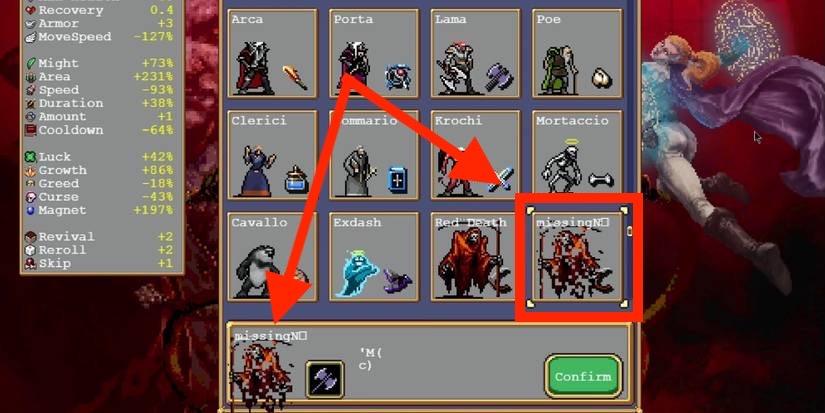
MissingNo eventually made its way into other games. Vampire Survivors has a secret character called missingNo, with randomized stats and glitched looks, and The Binding of Isaac: Rebirth hides an item of the same name that randomly scrambles your other items and attributes, as Wikipedia notes. How to unlock the Vampire Survivors character is a secret (mild spoiler, open it if you’d rather find out yourself):
One question remains that the glitch asks without meaning to: on which version, on which machine, did you first run into MissingNo? Radion won’t give you back the cartridge you lent a cousin, but the app brings your Steam, Xbox, PlayStation and Nintendo libraries together and keeps a record of what you played, which helps you remember where your memories come from. In the end, MissingNo is a Pokémon nobody meant to show and everybody wanted to see.