The development hell of Duke Nukem Forever
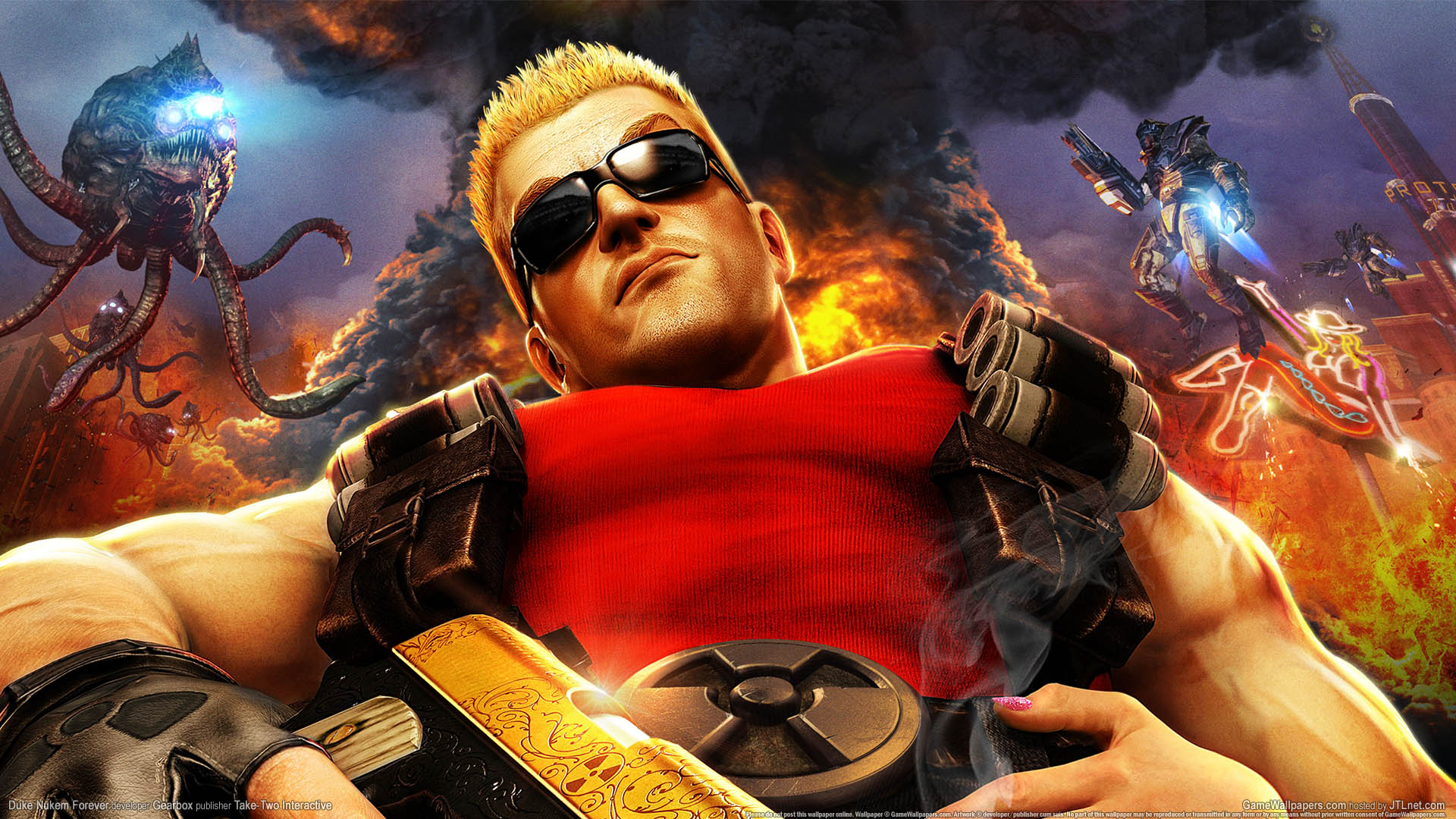
Duke Nukem Forever held the Guinness World Record for the longest development of a video game ever released for over a decade: 14 years and 43 days between its official announcement on April 28, 1997 and its release on June 10, 2011, per Guinness World Records. That headline figure undersells how much happened around it. Actual work on the game started as early as 1996, the team’s core engine was swapped once and then rewritten for the better part of a decade, the original studio let its entire development team go without technically closing its doors, and a dispute over money ended up in a Manhattan courtroom. To understand how Duke Nukem Forever became a punchline before it became a case study, it helps to start with the series that came before it.
Duke Nukem, from an obscure platformer to an FPS phenomenon
The series starts modestly on July 1, 1991, with Duke Nukem, a shareware platform game released by Apogee Software for the IBM PC, running on 16-color EGA graphics, according to the franchise’s Wikipedia page. Duke Nukem II follows in 1993, more than four times larger than the first game and rendered in 256-color VGA. The real shift comes in 1996 with Duke Nukem 3D, which trades the side view for first-person 3D and runs on the Build engine, one of the most widely used FPS engines of the era. The game earns an 89 on Metacritic for its PC version and gets banned in Brazil over its violence and crude humor, turning Duke into one of the era’s most recognizable action-game mascots.
1996-1998: an ambitious start on borrowed engines
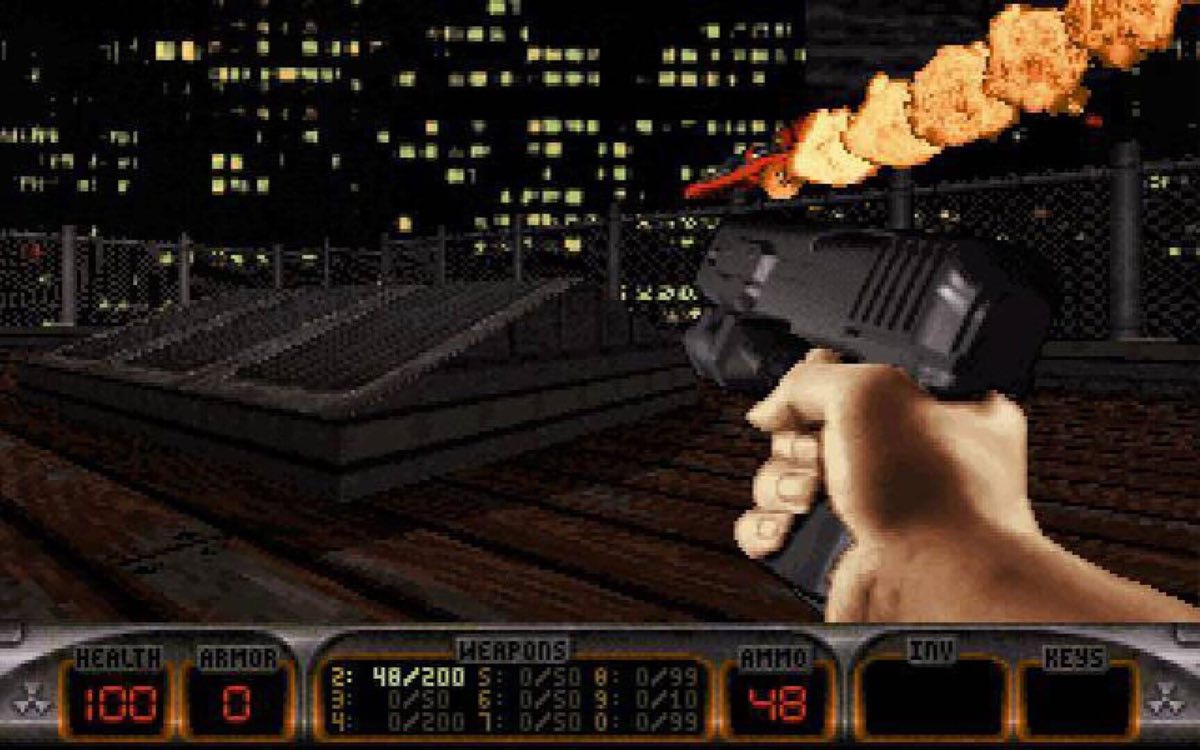
Work begins quietly in 1996, when 3D Realms licenses id Software’s Quake technology (including early access to the still-unfinished Quake II engine) for roughly 500,000 dollars. The studio makes the game official on April 28, 1997, per Guinness World Records’ own entry for the project (some contemporary press coverage put the announcement a day earlier, on April 27). The first screenshots released that summer are actually mockups built on the original Quake code, since the Quake II engine itself doesn’t arrive until later in the year. Barely a year later, at E3 1998, 3D Realms’ programmers convince director George Broussard to drop Quake II technology altogether in favor of Epic Games’ Unreal Engine, judged better suited to rendering the wide desert environments the team has in mind. Announcing the switch, Broussard states there won’t be “a significant development delay,” as quoted by Shacknews.
The always-a-newer-engine syndrome
That promise doesn’t hold. Through 1999 the team forks an early, unstable build of Epic’s engine before adopting technology derived from Unreal Tournament instead, which forces a rework of code already written, according to Shacknews. By the end of that year, half the game’s weapons are still conceptual and several release dates have already slipped. Internally, Broussard keeps folding in ideas pulled from competing games as they ship, to the point where staff joke about needing to hide new releases from him, per Wikipedia. A new trailer shown at E3 2001 still manages to impress the press, with an explorable Las Vegas and interactive vending machines. But after that brief high point, 3D Realms stops announcing release dates altogether and settles on the answer that it will ship “when it’s done,” a line that becomes the industry’s running joke about the project, according to the game’s Wikipedia page. What this adds up to isn’t three clean engine swaps spread evenly over fourteen years, but one real change of technology, Quake to Unreal, followed by nearly a decade of the team continuously rewriting and re-forking that same Unreal codebase. By 2007, co-founder Scott Miller would still describe the game as running on “a heavily modified version of the Unreal Engine.”
A tiny studio, a tangled publishing deal
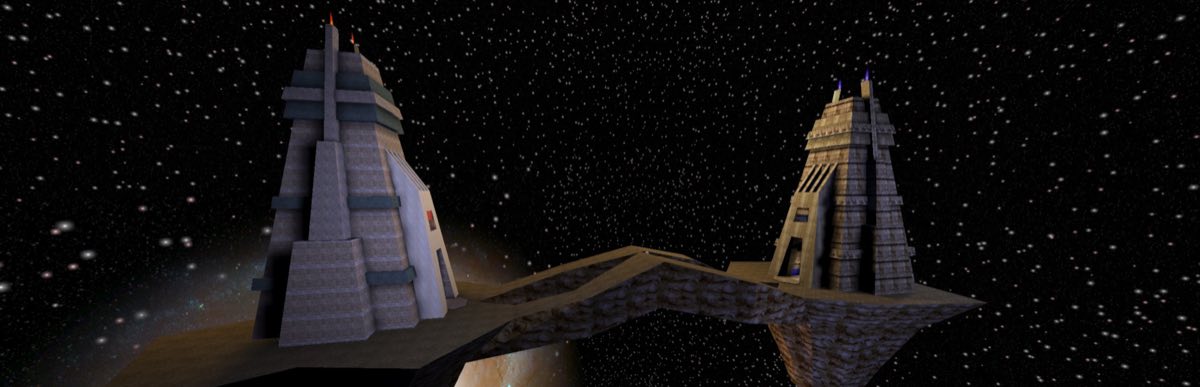
Take-Two’s involvement predates the public fights over Duke Nukem Forever’s delays. 3D Realms’ original publishing partner, GT Interactive, is absorbed by Infogrames in 1999; the following year, Take-Two Interactive acquires the Gathering of Developers, the publishing label 3D Realms had joined, picking up Duke Nukem Forever’s publishing rights in the process. As part of that 2000 arrangement, Take-Two pays Infogrames 12 million dollars for those publishing rights, a payment its lawyers would point back to nine years later, according to TechCrunch. 3D Realms was never a party to that transaction, and it would later insist it never saw a cent of that money.
By 2003, with the development team down to around 18 people, that relationship turns openly hostile. Take-Two announces a 5.5 million dollar write-off tied to the delays, and when its CEO, Jeffrey Lapin, publicly states the game won’t ship before the end of the year, Broussard fires back on a forum: “Take-Two needs to STFU,” a line that makes it all the way to CNN.
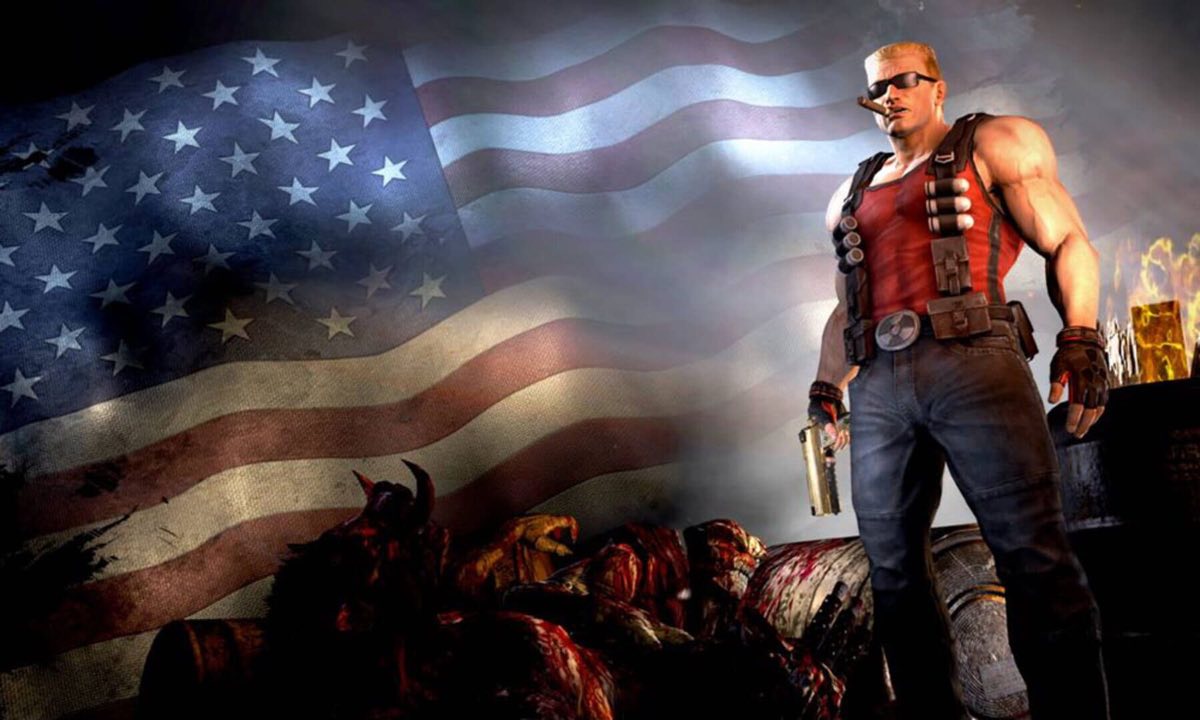
The studio keeps projecting confidence regardless: in January 2006, Broussard writes that “all the guns are finished” and “most of the creatures are finished,” then in August of the same year that the physics and animation systems are “virtually finished and shippable,” according to Shacknews. The game won’t actually ship for another five years. Between 2005 and 2006, seven to ten of the eighteen employees leave, worn down by a profit-sharing scheme that keeps getting pushed back, per Wikipedia. In 2006, Take-Two renegotiates the deal and offers 4.25 million dollars plus a 500,000 dollar bonus for a 2007 release, down from the 6 million originally promised. Broussard turns it down. He restarts hiring in early 2007, nearly doubling the team, and hands project leadership to Brian Hook, the first person on staff willing to push back on the founder’s constant feature additions.
2009: the money runs out, and a lawsuit follows
By its own account, 3D Realms had put more than 20 million dollars of its own money into the game by May 2009, according to Kotaku, which also confirms that Take-Two’s first direct payment to 3D Realms of any kind, a 2.5 million dollar installment, only arrived in July 2008, and even that money was tied to a separate, unannounced game rather than to Duke Nukem Forever itself. Reporting from the time describes 3D Realms asking Take-Two for around 6 million dollars to finish the game, and being offered instead a deal with no guaranteed minimum payment and no guarantee the game would ever ship; Broussard calls that counteroffer a fire sale, an attempt by Take-Two to acquire the franchise on the cheap, per Kotaku. That’s 3D Realms’ side of the story; Take-Two’s own public account of the negotiation is thinner. On May 6, 2009, 3D Realms halts development and lays off the entire game team, while insisting in a statement that “3D Realms (3DR) has not closed and is not closing,” still per Kotaku. Eight days later, on May 14, 2009, Take-Two sues 3D Realms in a Manhattan court for breach of contract, pointing back to the 12 million dollars it said it had paid for the publishing rights in 2000, according to TechCrunch.
Gearbox picks up the license, fourteen years in
Nine former 3D Realms employees, including Duke Nukem 3D co-designer Allen Blum, keep working on the game from home after the layoffs and eventually form their own studio, Triptych Games. On September 3, 2010, Gearbox Software, which had built expansion packs for Duke Nukem 3D years earlier, announces at PAX Prime that it has acquired the Duke Nukem intellectual property from 3D Realms, covering both Duke Nukem Forever and the wider franchise, according to Kotaku. Take-Two remains the publisher. Gearbox brings in Triptych Games and Piranha Games to finish the job, and Duke Nukem Forever finally goes gold on May 24, 2011.

A release judged against 2011’s standards
The game launches on June 10, 2011 in Europe and June 14 in North America. The European date is the one Guinness World Records uses to close out its calculation: 14 years and 43 days after the April 28, 1997 announcement, officially the longest development of a video game ever released at the time. The record didn’t last forever either: in 2024, the indie platformer Kien, announced in 2002 by developer AgeOfGames, shipped after a 22-year wait of its own, per Guinness World Records. Critics are unmoved by the milestone regardless. Duke Nukem Forever scores 49 out of 100 on Xbox 360, 51 on PlayStation 3, and 54 on PC on Metacritic. It’s tempting to pin those numbers entirely on fourteen years of hype, but the reviews of the time point to more concrete problems too, dated level design and rough technical edges among them, layered on top of a fanbase whose expectations had been shaped by more than a decade of trailers for a game that kept changing underneath them.
Duke Nukem Forever’s legend was never really about the 1997 pitch that started it. It’s about everything that happened instead of that pitch: a director who kept absorbing new ideas from every rival release, an engine swapped once early on and then rewritten for the better part of a decade, a publishing relationship that outlived several corporate reshuffles, and a studio that let its own team go rather than admit the game might never come out. Fourteen years and forty-three days is the number Guinness settled on. What actually happened is closer to a game that kept almost becoming several different games, until one version of it finally, for better or worse, had to ship.
Keeping track of a single game’s fourteen-year odyssey is one thing; keeping track of your own library across Steam, Xbox, PlayStation and Nintendo is another. That’s the more modest problem Radion is built to solve.