Apple Pippin: why Apple's game console flopped
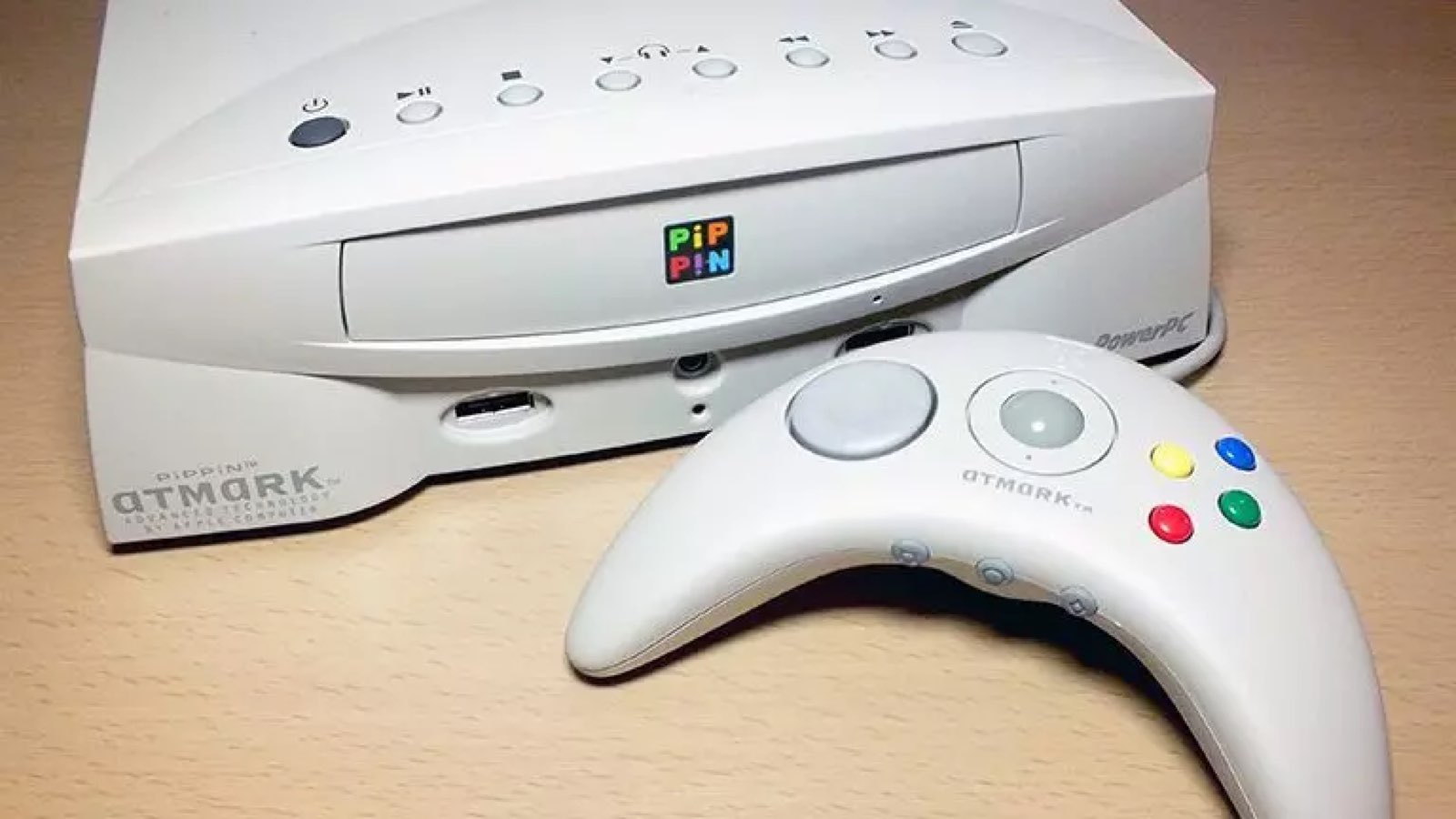
In 1996, Apple sold a game console. Hardly anyone remembers it, which is itself part of the story. The Apple Pippin, built under license by the Japanese toy giant Bandai, launched at 599 dollars and found only around 42,000 buyers worldwide between 1996 and 1998, according to figures compiled by Wikipedia and Low End Mac. Fewer than 12,000 units sold in the US, and some estimates put the number that actually reached customers as low as 5,000. For a machine Apple designed in-house and Bandai expected to sell by the hundreds of thousands, that is a rough outcome. Understanding why means looking at what the Pippin was actually trying to be, and the fact that it never quite decided.
A toy maker goes looking for a computer partner
The story starts on December 13, 1994, when Apple announced a partnership with Bandai, then Japan’s largest toy manufacturer, in Tokyo, around a multimedia platform internally named Pippin, after the apple variety. Bandai had good reasons to be interested. The company held the rights to franchises like Dragon Ball and Sailor Moon, and had just pocketed 330 million dollars from Power Rangers merchandise in the US alone in 1994, as recounted in Richard Moss’s book The Secret History of Mac Gaming, an excerpt of which ran on Ars Technica. Its president, Makoto Yamashina, wanted to turn Bandai into an entertainment company on the scale of Disney or Nintendo, and saw an opening in the CD-ROM, then booming thanks to games like Myst, as a way to get there without repeating the fate of the 3DO, a rival console that had struggled with a thin software library.
Apple, for its part, was in no position to launch a consumer product under its own name. The company had just been through a chaotic reorganization under CEO Michael Spindler, and was already reluctantly licensing Macintosh clones to third parties in a bid to claw back market share from Windows. A Macintosh division employee named Eric Sirkin was handed the Bandai project. He told Ars Technica his mandate was to open up opportunities for the Macintosh outside its core market, provided the resulting product was neither built nor sold by Apple itself. The final deal had Apple handle the technical design in exchange for a per-unit license fee, while Bandai took care of manufacturing, distribution, and marketing.
A machine deliberately crippled to never look like a Mac
Under the hood, the Pippin was an entry-level Macintosh stripped of anything that might have made it look like one. It ran a 66 MHz PowerPC 603 chip, the cheapest tier of the new architecture Apple had co-developed with IBM and Motorola, paired with just 6 MB of memory shared between the system and video. There was no hard drive: every piece of software had to ship on a CD-ROM carrying its own stripped-down copy of the operating system, and the only persistent storage on board was 128 KB of non-volatile RAM.
That restriction was not just about cost. Apple’s management had explicitly told Eric Sirkin’s team to make the machine incapable of competing with a real Macintosh, developer convenience be damned. Every title had to be specially adapted through a process Apple called making a CD-ROM “Pippinized,” backed by an RSA signature authentication scheme that stopped a standard Mac or PC disc from running as-is. Richard Sprague, who acted as an interpreter between the American and Japanese teams, summed up the thinking to Ars Technica: rather than a 200-dollar box that could read off-the-shelf CD-ROMs directly, Apple chose a lockdown so strict that no Mac software could run on it without being specially ported first.
Not a good computer, not a good game console
That trade-off eventually came back to bite the product itself. At a pre-launch developer conference, one attendee asked Eric Sirkin a simple question: would the Pippin be great as an internet device, a communications tool, or a game console? Sirkin had no answer, as he admitted years later to Ars Technica. The machine did not particularly excel at any of it. It cost more than a dedicated console while offering less general-purpose use than a computer, and it underperformed in games next to the PlayStation or Saturn despite having stronger specs on paper.
In the US, the console was actually sold under the name Pippin @WORLD, and the “@” in that name captures the problem fairly well: much of the intended audience simply did not know what it meant. That was the conclusion a Bandai executive reached when interviewed by PC Graphics Report in May 1996, blaming a lack of research into American market habits before trying to sell a game console as if it were a computer, according to the summary in Wikipedia. The internet pitch did not hold up against the competition either: an Electronic Gaming Monthly piece the following month pointed out that a Sega Saturn paired with its Netlink adapter still cost under 400 dollars combined, nearly 200 dollars less than the Pippin, for comparable online access. And on pure gaming, the Nintendo 64, PlayStation, and Saturn had already taken up all the shelf space that mattered.
A thin game library for an expensive machine
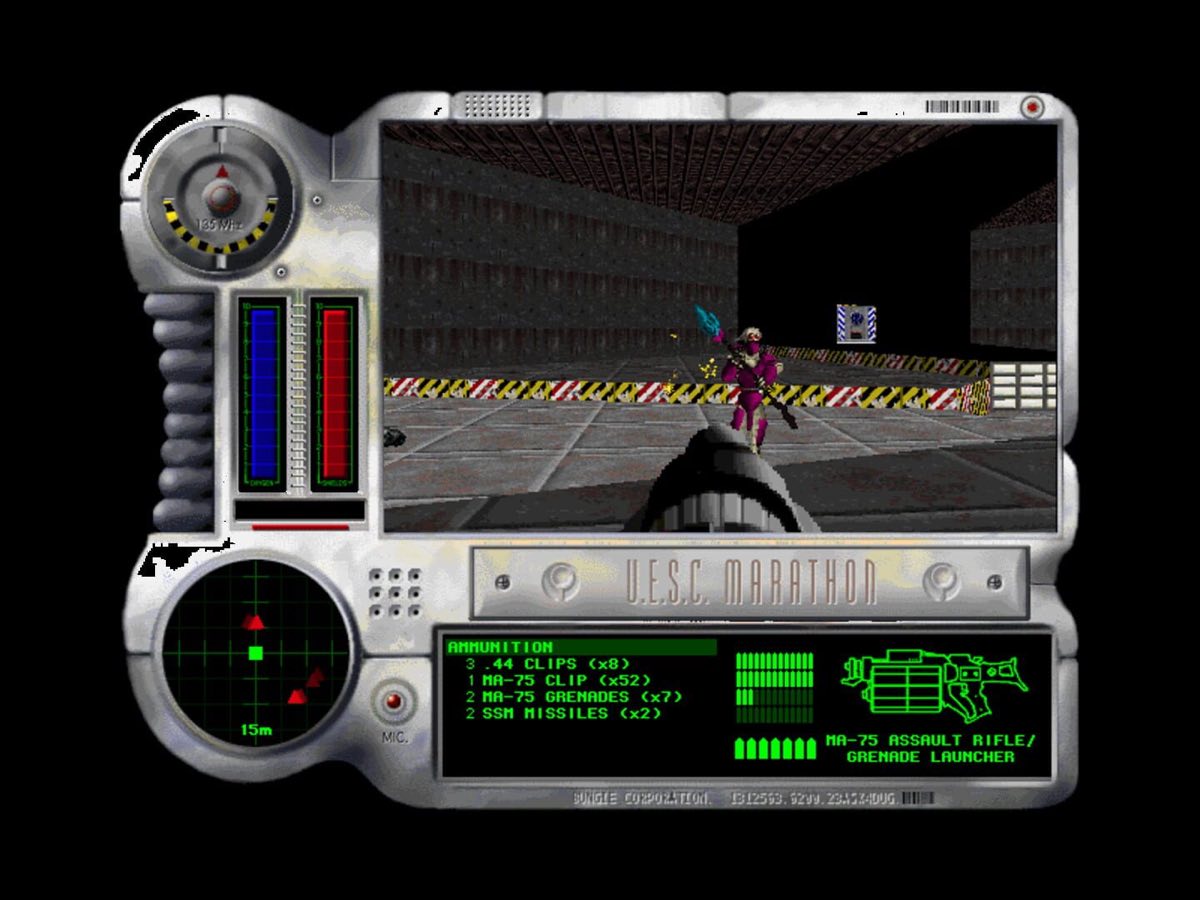
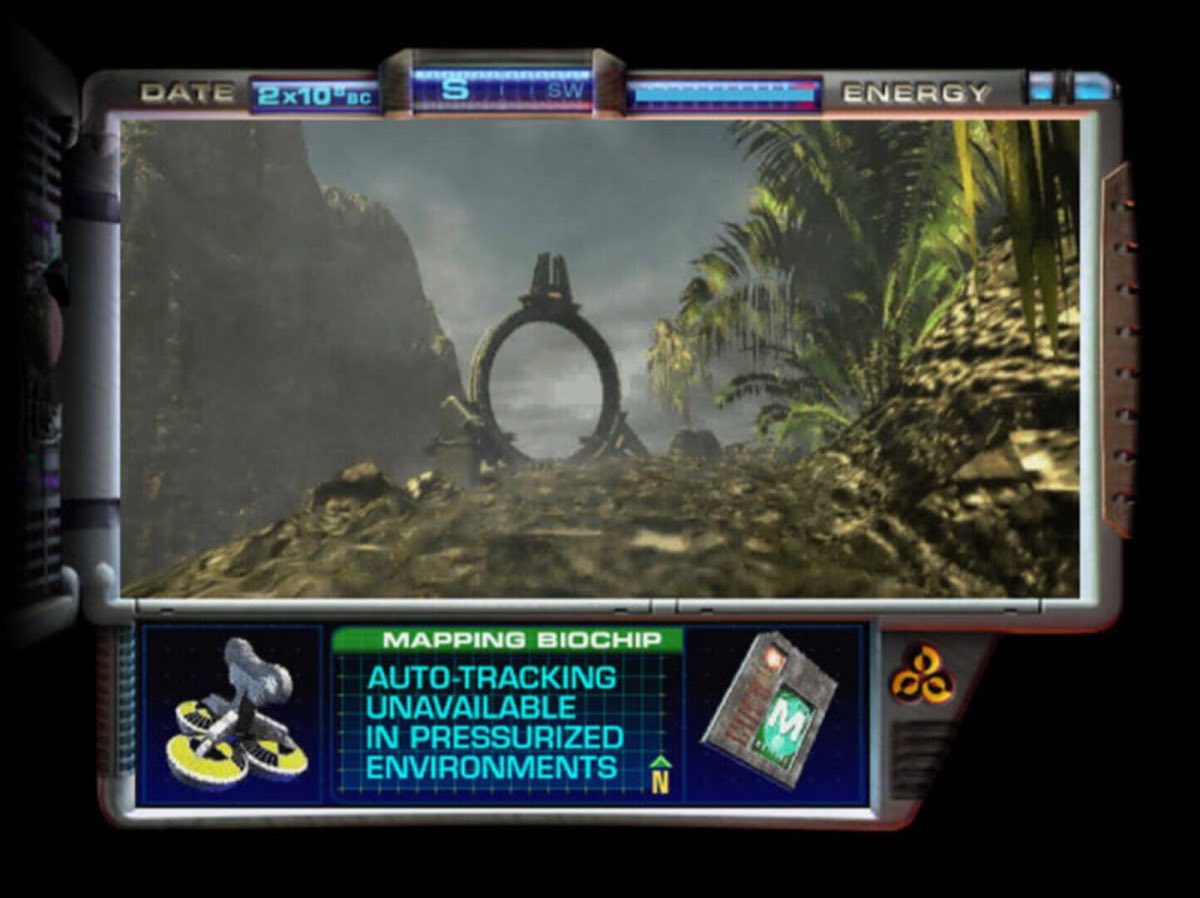
Bandai had planned to bring established Mac developers on board to fill out the library quickly, but the results were slim. Of all the existing Macintosh games and software, only three actually made the jump to Pippin: Marathon and Marathon 2: Durandal, Bungie’s celebrated shooters, bundled together as Super Marathon, the racing game Racing Days, and The Journeyman Project: Pegasus Prime, a remake of Presto Studios’ adventure game. Other Mac studios started porting their bigger titles but eventually abandoned the work partway through, since performance never got good enough to bother finishing, according to an engineer on Apple’s own Game Technology Group quoted in the same piece.
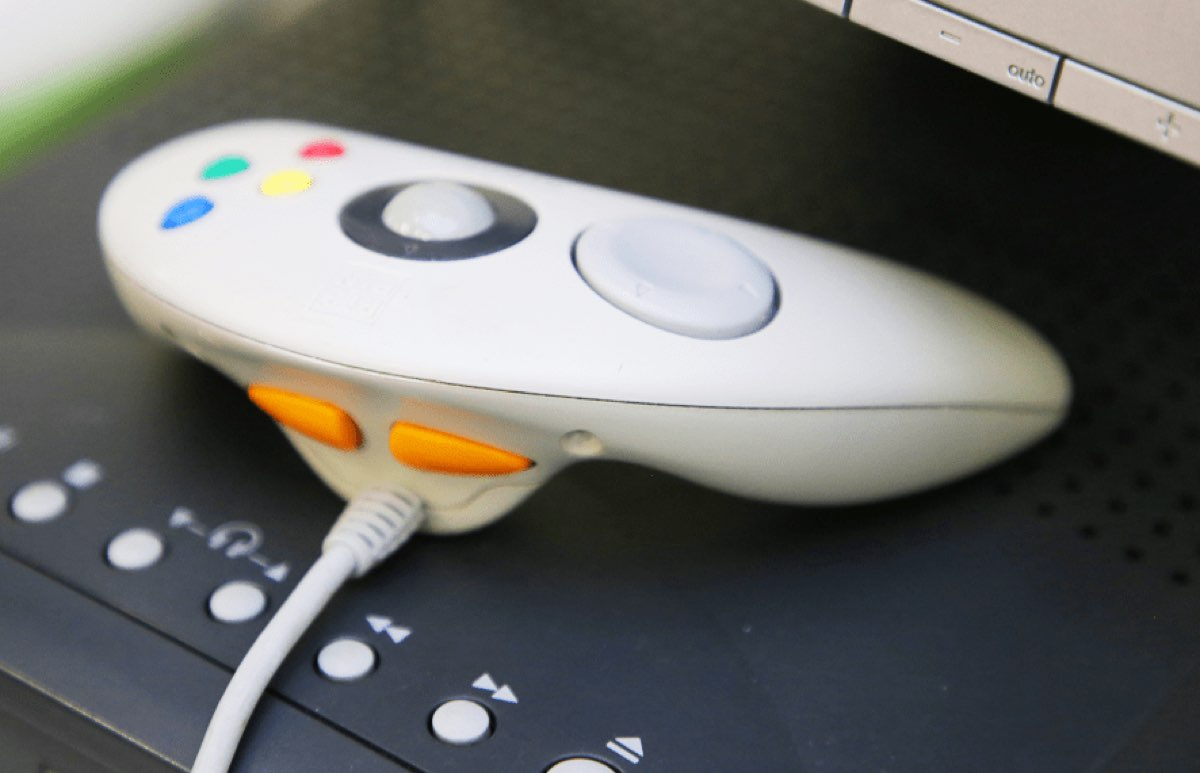
The rest of the catalog leaned heavily on multimedia utilities and edutainment, including Dragon Ball Z-licensed titles, a Compton’s interactive encyclopedia, and a handful of Japan-only games like L-Zone and Tunin’Glue. Even the games that did make the trip were not simple ports. On Super Marathon, programmer Jason Regier had to squeeze the original’s keyboard and mouse controls into the Pippin’s boomerang-shaped Applejack controller, built around a central trackball, while also rewriting the in-game computer terminal text so it stayed readable from across a living room on a TV screen rather than a monitor, as he told Ars Technica.
An ending that came faster than planned
The original goals had been anything but modest. Bandai was aiming for 500,000 units sold worldwide in the first year, roughly the sum of the 200,000 units expected in Japan and the 300,000 expected in the US according to Wikipedia’s figures, and had budgeted 100 million dollars for marketing. Apple’s own senior director of new media operations, Steve Franzese, told the Los Angeles Daily News he was aiming for 3 million units sold over three years across future manufacturing partners, with a royalty of under 15 dollars per device for Apple plus another 3 dollars per software sale, according to Ars Technica.
None of it happened. Apple killed the project internally in March 1997, the same month it cut 4,100 jobs trying to stop the bleeding from its broader troubles, according to Eric Sirkin. Bandai stopped manufacturing every Pippin model by that summer, once Steve Jobs’s return to Apple ended the Macintosh clone licensing deals the whole platform depended on. A European attempt, run by a Norwegian company called Katz Media under the name KMP 2000, never really got off the ground before Bandai pulled its support. The leftover stock was eventually bought up by the American company DayStar Digital in 1998, which reportedly sold roughly 2,000 more units.
What’s left of it
In 2006, PC World magazine ranked the Pippin 22nd on its list of the 25 worst tech products of all time, per Wikipedia. Eric Sirkin, who led the project on Apple’s side, offers a more nuanced take than that ranking suggests. He told Ars Technica the Pippin was doomed from the start not by its engineering but by the impatience of a company that would not invest in a product long enough to let it find an audience. Bandai, by contrast, believed in it enough to have already prepared a second generation, with a stronger graphics chip, by the time Apple pulled the plug.
This story was never really about processor speed or CD-ROM pricing. It is about a machine that could never answer a simple question: what is it actually for. That curiosity about forgotten old hardware never really goes away. Radion keeps the spec sheet for thousands of consoles, including the Apple Pippin, for anyone who would rather look a detail like that up than trust their memory.