Halo was a Mac game: how Steve Jobs lost Master Chief
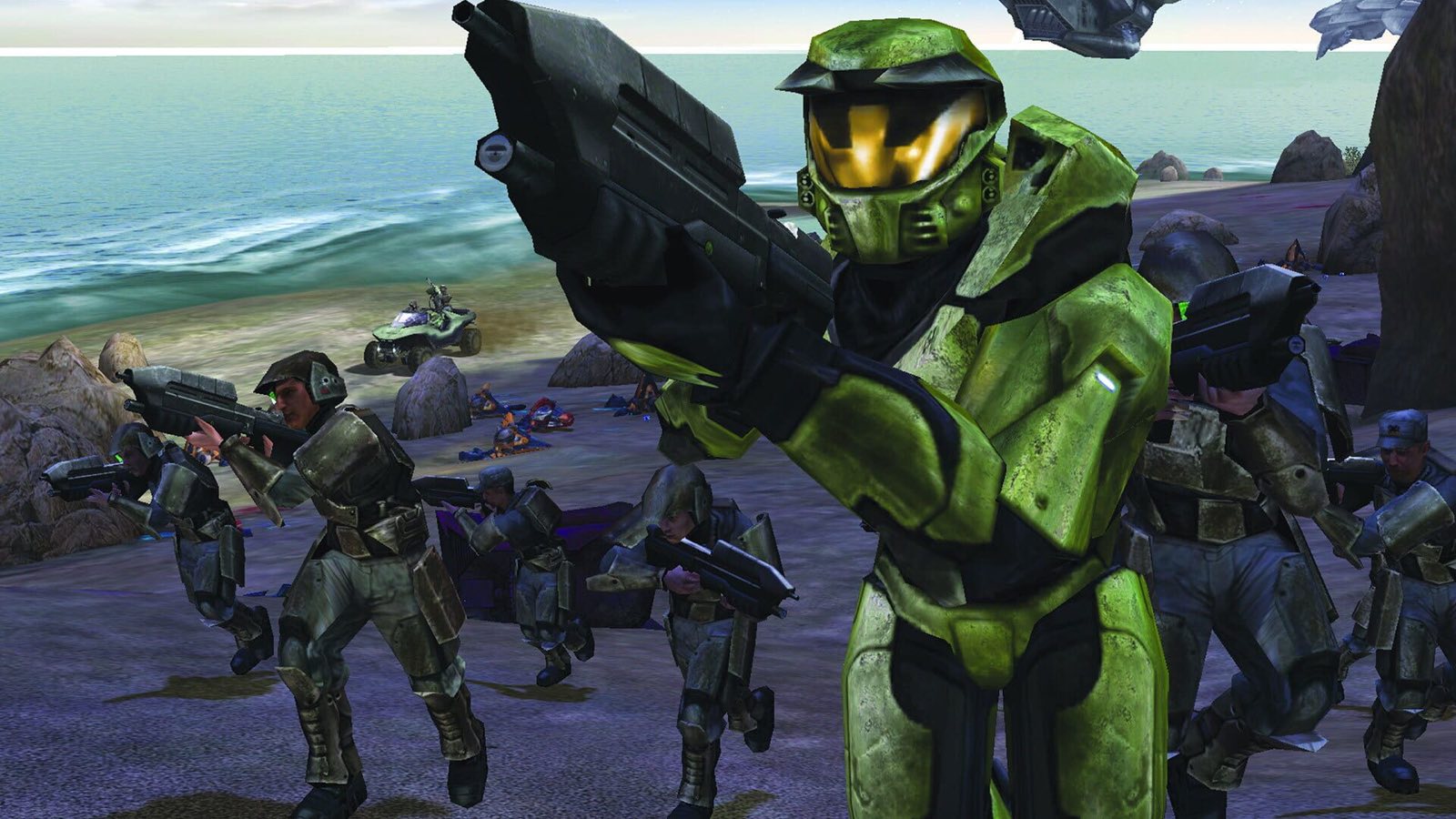
On July 21, 1999, on the stage of Macworld Expo in New York, Steve Jobs cued up a demo and called it one of the coolest games he had ever seen. On screen, a soldier in green armor and a gold visor climbs into a 4x4 and tears down a hillside while an alien glider loops through the sky. The game is called Halo, it runs on a Power Mac G3, and it is due on Mac and PC “early next year.” Two years later it shipped on Microsoft’s Xbox, and nowhere else. This is how Steve Jobs’s Mac game became the best sales pitch for the console across the aisle.
A Mac game from Bungie, but not yet Halo
For Apple players, Bungie was no ordinary studio. The Chicago team had made Marathon in 1994, a shooter hailed at the time as the Mac’s answer to Doom, followed by Myth: The Fallen Lords in 1997. Halo came out of that work. Jason Jones, the studio’s co-founder, explained in 1999 that its engine descended from a next-generation version of Myth’s terrain engine, with polygonal units. The earliest prototypes did look like a real-time strategy game. Alex Seropian, the other co-founder, later summed up what came next in one line: the strategy game became a third-person game, which became a first-person shooter.

So the 1999 demo showed an in-between version, third-person, which Jones launched himself in front of the crowd. The choir that opens the Halo theme was already there, with composer Marty O’Donnell’s own voice among the singers. Bungie had picked Macworld on a simple calculation, which Jones laid out at the time: Jobs’s keynote reached a mainstream press that rarely covers video games. The game was nowhere near finished (Jones put the work done at about a third), but the effect was achieved.
Microsoft buys Bungie in June 2000
On June 19, 2000, less than a year after the keynote, Microsoft announced it was buying Bungie. The studio left Chicago for Redmond, and Take-Two, which held roughly 20 percent of the company, sold its stake. In the announcement, Ed Fries, head of Microsoft’s games division, talked about making titles for PC and Xbox. The Mac was not on the list.

Jones later explained his choice: the studio feared being bought by someone who only wanted Mac ports, or who had no clue about games, and Microsoft offered the chance to work with a company that took games seriously. On Apple’s side, things nearly went the other way. According to former Bungie developer Tuncer Deniz, Apple had a shot at buying the studio too: Jobs first declined, changed his mind about a week later, and found that Bungie had already signed with Microsoft.
Jobs’s reaction is known through Ed Fries. He told Develop magazine in 2010 that Jobs called as soon as the deal was announced, furious with Steve Ballmer for buying the best Mac studio and turning it into an Xbox studio. Fries was put in charge of cooling things down. Microsoft committed to porting PC games to the Mac and to helping set up a company to do it, and Fries went on stage with Jobs at Macworld New York 2000 to reassure Mac users. He described it as a “pretty strange time.”
Rewriting Halo for the Xbox
At E3 2000, Halo was still a third-person action game. Once it became a Microsoft exclusive, Bungie rewrote its engine for the upcoming console and switched to a first-person view. Several team members say it only truly came together in the last four or five weeks, when the Xbox hardware was finalized.
Development was messy. At one stage Master Chief was meant to travel with a companion, Blind Wolf, a dinosaur-like creature he could ride. Titles on the table included Crystal Palace and The Santa Machine. Microsoft’s marketing department felt “Halo” alone described nothing next to the competing military shooters. Bungie kept the name, and the compromise was the subtitle Combat Evolved, which the team hated, according to designer Griesemer. Multiplayer, which had been cut, was picked back up at the last minute by Michael Evans and Hardy LeBel, with maps largely built by contractors or by developers sneaking time in between other jobs.

The bet Microsoft didn’t expect to win
Inside Microsoft, nobody was sure they were holding a blockbuster. Phil Spencer, then a vice president at Microsoft Game Studios, recalled that the game with the most internal buzz wasn’t Halo but Oddworld: Munch’s Oddysee, which was supposed to cement the Xbox’s reputation. Bungie had never worked on a console, and people wondered whether “these Mac guys” could make the jump.
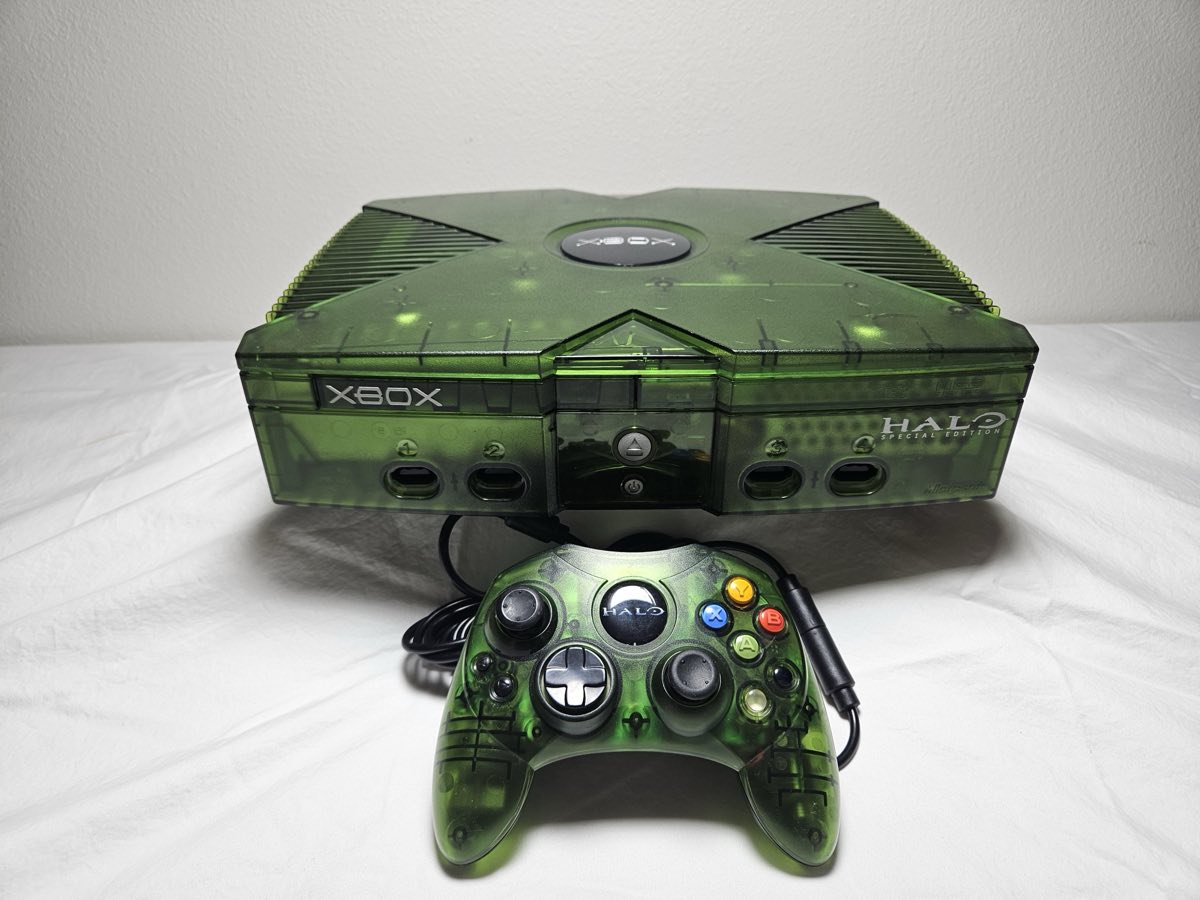
Both games launched on November 15, 2001, alongside the console. In April 2002, Microsoft announced that Halo had just passed one million copies in the United States and Canada, the fastest million-seller on any next-generation console. In the UK, according to Chart-Track, 86 percent of Xbox buyers had also picked up Halo less than a month after launch. The game took the Academy of Interactive Arts & Sciences’ Game of the Year award in February 2002, then passed three million copies in the summer of 2003. In 2012, Fortune estimated that the Bungie acquisition, which cost less than 40 million dollars, had generated roughly 3 billion dollars in series sales.
The game also delivered what the Xbox still lacked: a reason to plug it in at a friend’s place. Four controller ports, split screen, consoles linked together for local network play.
The Mac gets Halo in 2003, then nothing
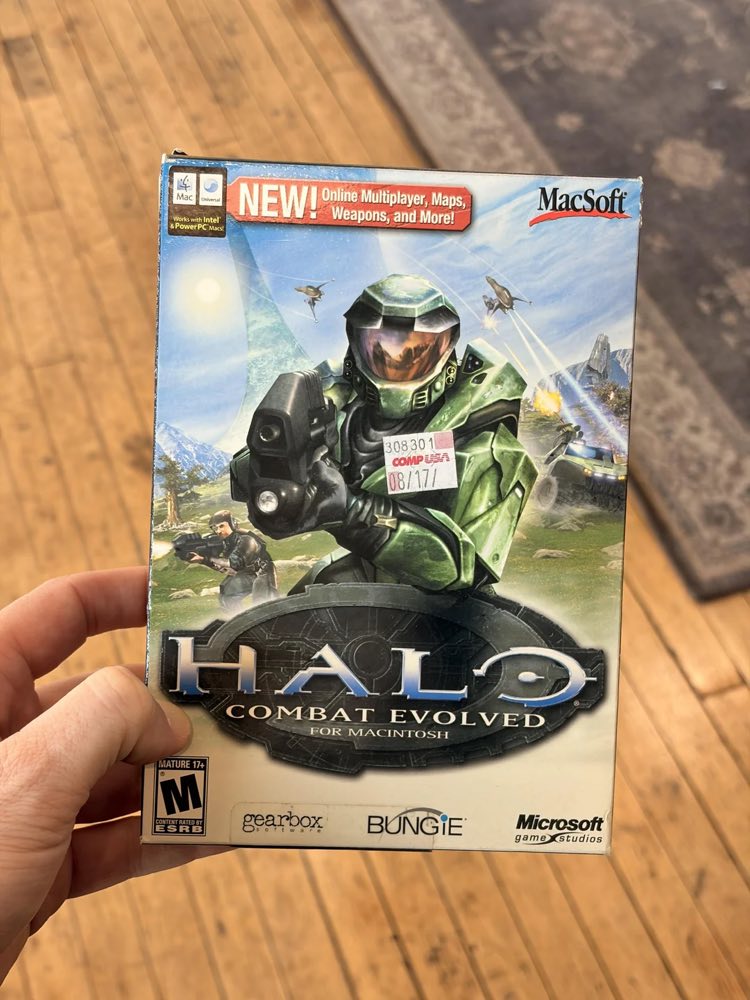
Microsoft kept its promise in its own way. Gearbox ported the game to PC in 2003, then MacSoft released the Mac version, shipped from December 11, 2003, more than four years after Jobs’s demo. Since then, no other Halo has come natively to an Apple platform. To date, the series can only be played on a Mac through the cloud, with Xbox Game Pass Ultimate or GeForce Now.
Apple had already tried its hand at consoles in 1996 with the Pippin, a flop covered in our article on the Apple Pippin. Bungie left Microsoft in 2007 and has belonged to Sony since 2022. The remake Halo: Campaign Evolved came out on July 28, 2026 on Xbox Series, PC and, for the first time, PlayStation 5.
One franchise, four platforms and as many versions: it gets hard to remember what you own and where. Radion brings your Steam, Xbox, PlayStation and Nintendo libraries together in one place, with your progress in each game. The app won’t tell you which version of Halo deserves a replay, but it keeps you from rebuying something you already have.
A demo built to sell Macs ended up selling Xboxes, and the Mac had to wait more than four years for its own version.